Graphical Models for Driver Behavior Recognition and Prediction in a SmartCar
Nuria Oliver and Alex Pentland, MIT Media Lab / Microsoft Research
Problem and testbed
We developed the SmartCar to study whether a vehicle could recognize a
driver's tactical maneuver from both the driver's actions and the surrounding
context. The testbed combined real-time data acquisition and playback with
dynamical graphical models. Four video signals captured surrounding traffic,
the driver's head position, and the driver's viewpoint; the car also recorded
brake, gear, steering-wheel angle, speed, and throttle signals.
Collecting those signals was a substantial part of the project. In the first
acquisition system, speed, steering, brake, and gear sensors shared a serial
connection and were polled individually by the host computer. Each reading
was stored with its sensor identifier and a timestamp so that the recorded
drive could later be replayed at approximately the original pace. On a
Pentium 180, the system collected about 22 sets of readings per second.
The vehicle had forward-facing and driver-facing cameras, but their recordings
still had to be synchronized with the sensor playback manually. We also
implemented the first stage of GPS support by parsing position messages,
although displaying the car on a digital road map remained future work. These
constraints shaped the testbed as much as the later modeling did.
More than 70 drivers operated the SmartCar for 1.25 hours in the greater
Boston area over two months. We trained hidden Markov models (HMMs), with
coupled HMMs as an extension, to represent seven maneuvers: passing, changing
lanes left and right, turning left and right, starting, and stopping.
Our models recognized and predicted these labeled maneuvers and exposed their
internal state as a drive unfolded, as the passing video below illustrates.
This made them relevant to car simulators and adaptive driver interfaces. We
limited the experiments to a fixed set of tactical maneuvers and driving
around greater Boston; they did not establish that the models could prevent
dangerous situations in general.
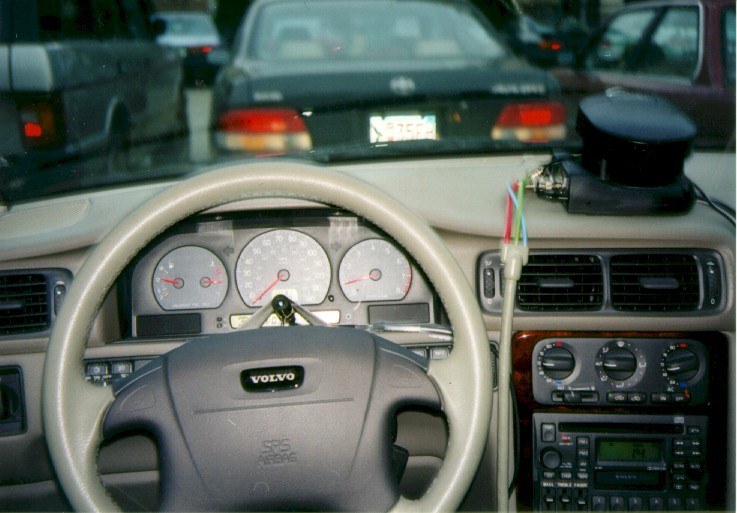
The SmartCar testbed recorded the driver, vehicle controls, and surrounding
traffic.
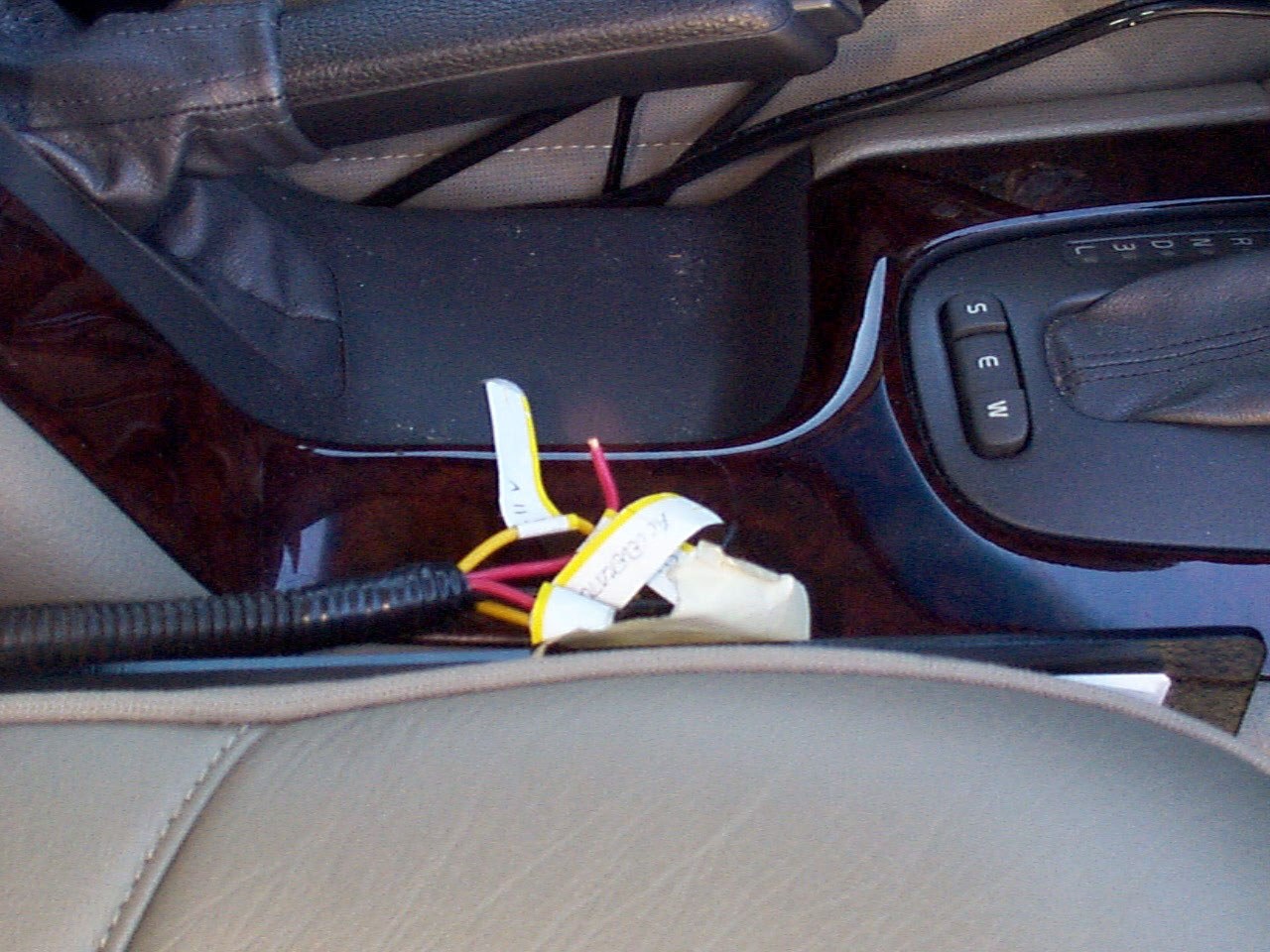
Sensor wiring connected the vehicle signals to the data-acquisition system.
Nuria Oliver, Alex P. Pentland (2000). Graphical Models for Driver Behavior Recognition in a SmartCar. Proceedings of the IEEE Intelligent Vehicles Symposium 2000, 7-12. https://doi.org/10.1117/12.389351
BibTeX
@inproceedings{oliver2000graphical,
  author = {Nuria Oliver and Alex P. Pentland},
  title = {Graphical Models for Driver Behavior Recognition in a {SmartCar}},
  booktitle = {Proceedings of the IEEE Intelligent Vehicles Symposium 2000},
  pages = {7--12},
  year = 2000,
  doi = {10.1117/12.389351},
  cites = 446,
  citesdate = {2026-03-23}
}
Nuria Oliver, Alex P. Pentland (2000). Driver Behavior Recognition and Prediction in a SmartCar. Proceedings of SPIE 4023, 280-290. https://doi.org/10.1117/12.389351
BibTeX
@article{oliver2000driver,
  author = {Nuria Oliver and Alex P. Pentland},
  title = {Driver Behavior Recognition and Prediction in a {SmartCar}},
  journal = {Proceedings of SPIE},
  volume = 4023,
  pages = {280--290},
  year = 2000,
  doi = {10.1117/12.389351},
  cites = 140,
  citesdate = {2026-03-23}
}